Added governance, not replacement
- Integrates with your existing tracking flow
- Keeps implementation ownership where it is today
- Adds control, traceability, and evidence on top
Tracking breaks quietly more often than teams expect. Definitions live in documents, implementation lives in tag managers and code, and issues are usually discovered only after reporting is already affected.
Tracking Assistant brings definition, validation, monitoring, promotion, and evidence into one governed workflow so teams can trust what is sent and explain what changed.
Start with a live walkthrough or go straight to the technical docs.
Most teams invest in tracking quality at implementation time, but ownership gets weaker after launch. New releases, handovers, and partial fixes introduce silent regressions that are hard to detect early.
Without continuous governance, teams depend on manual QA and delayed report checks. That creates rework, uncertainty, and avoidable risk in analytics-driven decisions.
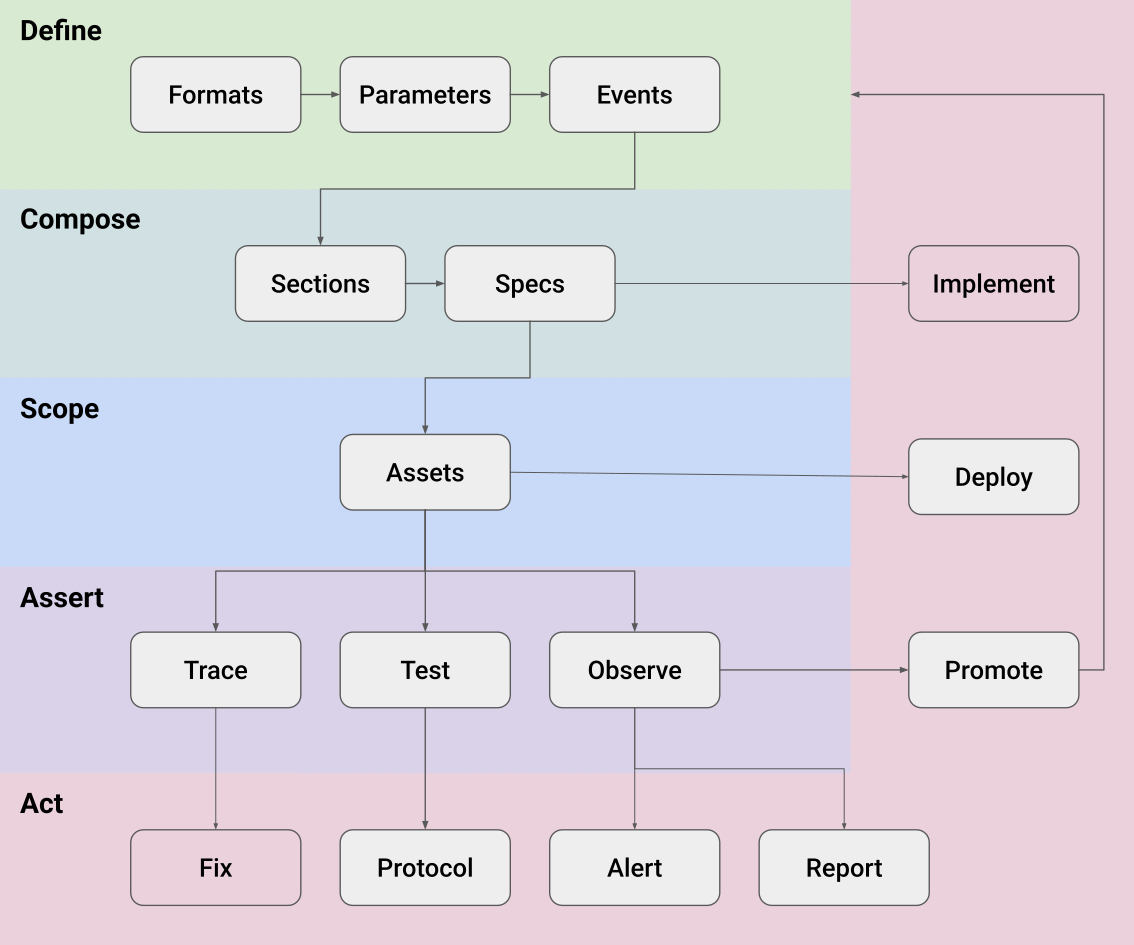
Teams define what should be sent, validate what is actually sent, monitor drift over time, and promote changes safely across environments.
Because this is based on real observed events, documentation and evidence can be generated from runtime behavior instead of assumptions.
Tracking Assistant adds governance to your current implementation and works with your preferred tag management and tracking stack. No rip-and-replace required.
You can start with one asset and one environment, then expand gradually as teams adopt the workflow.
Start with a first governed scope quickly, then expand incrementally across assets and environments.
No. Tracking Assistant is designed to work with your existing setup.
Incoming events are continuously checked against active specifications and flagged when they drift or fail validation.
At the event payload level, scoped by asset and environment, across both client and server flows.
Tracking Assistant is a production SaaS platform hosted and developed in Switzerland, built for teams that need reliable tracking governance over time.